Every home chef, from the novice baker to the seasoned culinary enthusiast, knows the magic that happens when ingredients come together seamlessly. While manual whisks can be a workout, and stand mixers can demand significant counter space, the humble Hand Whisk Mixer gracefully steps into the spotlight as the ultimate kitchen workhorse. It’s the perfect bridge, offering powerful assistance without the bulk, ready to transform your culinary creations with ease and precision.
Think about it: that moment you need to whip up fluffy cream for dessert, beat eggs to perfection for an omelette, or seamlessly blend a cake batter. A hand whisk mixer isn’t just a convenience; it’s a vital tool that makes these tasks not just easier, but genuinely enjoyable. This compact powerhouse brings professional-level mixing right into your hand, streamlining countless recipes and letting you focus on the joy of cooking and baking.
A Whisk Through Time: The Evolution of the Hand Whisk Mixer
The concept of mechanized mixing is older than you might think, born out of a desire to simplify repetitive kitchen tasks. Long before electricity powered our homes, innovations sought to ease the strain of manual whisking. The journey began in the mid-19th century with inventors like Ralph Collier in Baltimore, Maryland, who patented a mixer with rotating parts in 1856. Not long after, E.P. Griffith in England (1857) and J.F. and E.P. Monroe in the US (1859) introduced their hand-turned rotary egg beaters, which quickly became popular for their efficiency in whipping eggs to airy peaks. These early designs, often made of tin and hand-cranked, were revolutionary for their time, making tasks like preparing meringue or batters significantly less strenuous.
Fast forward to 1885, and American inventor Rufus Eastman introduced what’s widely considered the first electric mixer. This marked a significant leap, paving the way for the electric handheld devices we rely on today. While larger, commercial stand mixers gained traction in the early 20th century with brands like Hobart (later KitchenAid) leading the charge, the true accessibility of electric mixing arrived with the development of compact, portable hand whisk mixers. By the mid-20th century, these convenient gadgets became a staple in homes, forever changing how people approached baking and everyday cooking, moving mixing from a laborious chore to an effortless delight.
Understanding Your Hand Whisk Mixer: Technology and Design
Modern hand whisk mixers are a marvel of engineering, combining power, versatility, and user-friendly design. Knowing what makes them tick can help you choose the best model and maximize its potential in your kitchen.
Motor Power: The Heart of the Mixer
At the core of every hand whisk mixer is its motor, measured in watts. This dictates how effectively your mixer can handle different ingredients. Most reliable models offer motor power between 200 and 350 watts, a sweet spot that balances efficiency with versatility. A higher wattage means less strain on the motor when tackling thicker mixtures like cookie dough or dense batters, providing consistent performance. Some advanced models even feature “SmartMix” or “Automatic Feedback” technology, which senses the resistance of the mixture and adjusts power accordingly, ensuring smooth operation and preventing motor burnout. It’s like having a little brain in your mixer, constantly optimizing for the perfect blend.
Speed Settings: Control at Your Fingertips
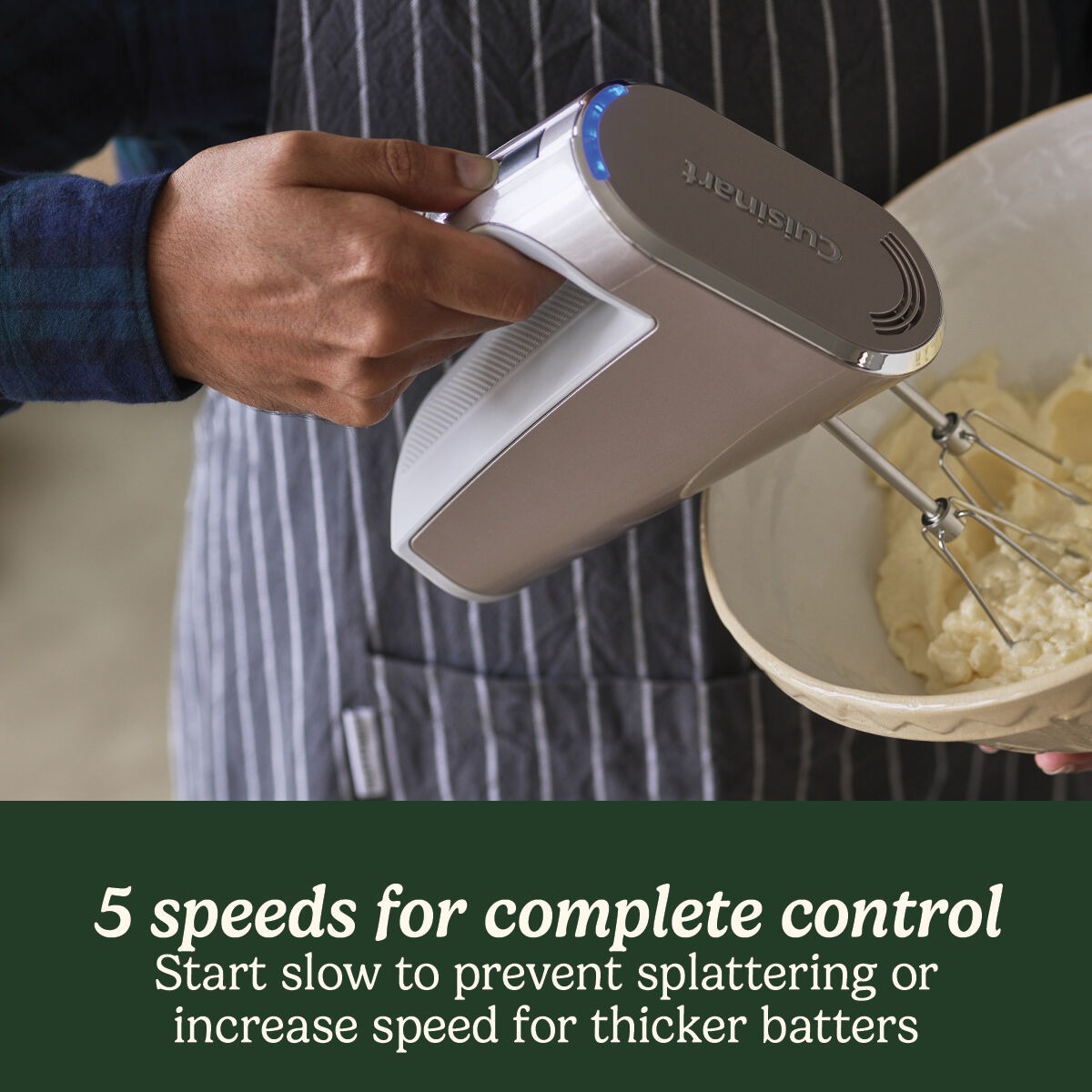
The ability to control mixing speed is paramount for achieving desired textures, from gently folding in dry ingredients to vigorously whipping egg whites. Most hand whisk mixers offer multiple speed settings, typically ranging from 5 to 9 speeds, often complemented by a “turbo” or “QuickBurst” button for an extra boost of power when you need to power through stubborn lumps or reach stiff peaks quickly. Look for models with a “SmoothStart” feature, which gradually increases the speed to prevent splattering—a common kitchen woe! Whether you prefer simple dial controls or a digital display, having precise control over your mixing speed ensures you get consistent, professional-quality results every time.
Attachments: Your Culinary Arsenal
One of the greatest strengths of a hand whisk mixer lies in its interchangeable attachments, each designed for specific tasks:
- Standard Beaters: These are your go-to for general mixing. Perfect for creaming butter and sugar until light and fluffy, combining cake batters, or mixing cookie doughs. Their design ensures ingredients are thoroughly incorporated without over-aerating.
- Balloon Whisk: If airy lightness is your goal, the balloon whisk is your best friend. Its shape is engineered to incorporate maximum air, making it ideal for whipping egg whites into stiff meringues, creating voluminous whipped cream, or whisking light sauces.
- Dough Hooks: Designed to mimic the action of hand kneading, dough hooks are excellent for lighter doughs like pizza or soft bread. While a hand whisk mixer might struggle with very heavy, dense bread doughs over extended periods, these hooks are fantastic for quick kneading tasks.
- Scraper Beaters: Some premium models offer scraper beaters, often coated with silicone. These are brilliant because they scrape the sides of your bowl as they mix, reducing the need for manual scraping and often resulting in quieter operation while protecting your mixing bowls from scratches.
Ergonomics and Storage: Comfort and Convenience
A good hand whisk mixer is not just powerful; it’s also a pleasure to use. Ergonomic design plays a crucial role, with lightweight bodies and comfortable grips that minimize hand fatigue, especially during longer mixing sessions. Features like a swiveling power cord offer flexibility for both right- and left-handed users.
Storage is another key consideration. Many hand whisk mixers come with cleverly designed snap-on storage cases that neatly house all attachments and the cord, keeping your kitchen organized and ensuring you never have to hunt for a missing beater again. Some even boast a “bowl rest” feature, allowing you to perch the mixer on the edge of your bowl, preventing drips on your counter when you pause. For ultimate freedom, cordless hand whisk mixers offer unparalleled mobility, letting you mix wherever you need without being tethered to an outlet.
Mastering Your Hand Whisk Mixer: Tips for Effortless Mixing
Getting the most out of your hand whisk mixer involves a few simple techniques and safety considerations that can elevate your culinary results.
Getting Started: Safety First!
Before you dive into mixing, always prioritize safety. Begin by carefully reading your owner’s manual to familiarize yourself with your specific model’s features and recommendations. When attaching or removing beaters, ensure the mixer is unplugged and the speed setting is at zero or off. Once you’re ready to mix, plug it in, place the beaters into your ingredients, and always start on the lowest speed setting. This simple step, championed by culinary experts like Chef Emily Lawson, helps to prevent ingredients from splattering out of the bowl and keeps your kitchen tidy. “Starting slow is the secret to a splatter-free kitchen and a perfectly incorporated mixture,” advises Chef Lawson. “It allows your ingredients to gently combine before the real work begins.”
Choosing the Right Attachment & Speed
Matching the right attachment to your task is crucial. Use standard beaters for creaming butter and sugar, mixing cake batters, or combining dry and wet ingredients. For whipping egg whites or cream, the balloon whisk is your best option, designed to incorporate air for maximum volume. Dough hooks are suitable for lighter doughs, but remember, a hand whisk mixer is generally not designed for heavy, dense bread doughs, which can strain the motor over time.
Begin with a low speed to incorporate ingredients, then gradually increase the speed as needed. For example, when whipping cream, start at a low speed to prevent splattering, then increase to medium-high until soft or stiff peaks form.
Optimizing Your Mixing Technique
- Use Large Bowls: Always opt for a mixing bowl that is generously sized. This gives your ingredients room to expand and prevents batter from overflowing or splattering, especially at higher speeds.
- Room Temperature Ingredients: For tasks like creaming butter and sugar, ensure your butter is at room temperature. This allows it to emulsify properly with the sugar, creating a light, airy texture that is fundamental for many baked goods. Cold butter will result in a lumpy mixture.
- Gradual Ingredient Addition: When adding dry ingredients to wet, do so gradually. Incorporate a small amount at a time on a low speed, mixing just until combined before adding more. This prevents overmixing and ensures a smooth, even consistency.
Beyond Baking: Creative Uses for Your Hand Whisk Mixer
While baking is undoubtedly a hand whisk mixer’s forte, its utility extends far beyond cakes and cookies. This versatile tool can be your secret weapon for countless everyday cooking tasks:
- Fluffy Mashed Potatoes: Say goodbye to lumpy mash! A hand whisk mixer can create perfectly smooth, airy mashed potatoes in minutes.
- Shredding Chicken: Place cooked chicken breasts in a bowl and use your mixer (with beaters) on a low speed to quickly shred chicken for tacos, sandwiches, or casseroles.
- Homemade Gravies and Sauces: Whisk away lumps in gravies, create smooth hollandaise, or emulsify salad dressings with ease.
- Dips and Spreads: Blend creamy dips like hummus or smooth cream cheese spreads for bagels.
- Scrambled Eggs and Omelettes: Achieve extra fluffy eggs by thoroughly whisking them with your hand mixer before cooking.
Why Every Kitchen Needs a Hand Whisk Mixer
In a world full of kitchen gadgets, the hand whisk mixer stands out as an indispensable tool for good reason.
- Time-Saving Efficiency: It dramatically cuts down on the time and effort required for whisking, beating, and mixing, allowing you to whip up dishes in a fraction of the time compared to manual methods.
- User-Friendly Design: Lightweight, compact, and designed for comfortable handling, these mixers are easy to maneuver, making mixing tasks accessible and enjoyable for everyone, regardless of skill level.
- Consistent Results: Achieve uniform textures and perfectly aerated mixtures every time, contributing to more successful and delicious culinary outcomes. No more unevenly mixed batters or flat meringues!
- Compact & Affordable: Unlike bulky stand mixers, hand whisk mixers take up minimal storage space and are generally more budget-friendly, making them an excellent investment for any kitchen.
Expert Insights: Elevating Your Mixing Game
Chef Emily Lawson, a renowned pastry chef and culinary instructor, emphasizes the transformative power of this kitchen staple: “The hand whisk mixer is often underestimated, but for sheer versatility and everyday utility, it’s a non-negotiable for my kitchen. It empowers home cooks to achieve professional textures for everything from delicate meringues to hearty mashed potatoes, all with a surprising amount of control and without overwhelming your workspace. It truly bridges the gap between traditional methods and modern efficiency.”
Frequently Asked Questions (FAQ)
What’s the difference between a hand mixer and a stand mixer?
A hand mixer is a portable, handheld electric device primarily for lighter tasks and smaller batches, offering flexibility to move around a bowl. A stand mixer is a larger, stationary appliance with a powerful motor, designed for hands-free operation and handling heavier tasks like kneading large quantities of dough.
Can I make bread dough with a hand whisk mixer?
Yes, hand whisk mixers can handle lighter bread doughs with their dough hook attachments. However, for very heavy, stiff doughs or frequent bread making, a stand mixer is generally recommended as it has a more robust motor designed for sustained high-torque tasks.
How do I clean my hand whisk mixer attachments?
Most hand whisk mixer attachments (beaters, whisks, dough hooks) are dishwasher-safe. Always check your specific model’s manual for care instructions. For the main unit, wipe it clean with a damp cloth, ensuring no water enters the motor housing. Always unplug the mixer before cleaning.
What wattage is best for a hand whisk mixer?
For a versatile hand whisk mixer that can handle most common kitchen tasks, a wattage between 200 and 350 watts is ideal. This range provides enough power for whipping, creaming, and mixing batters without excessive strain.
Are cordless hand mixers powerful enough?
Modern cordless hand mixers have significantly improved in power and battery life. While they might not match the sustained power of a high-wattage corded model for very heavy tasks, they are perfectly powerful for whipping cream, beating eggs, mixing cake batter, and other everyday uses, offering unmatched convenience and portability.
Conclusion
The hand whisk mixer is more than just another kitchen gadget; it’s a testament to how intelligent design can profoundly impact our daily cooking and baking routines. From its humble beginnings as a manual egg beater to today’s feature-rich electric models, it has consistently adapted to meet the demands of home chefs. By understanding its capabilities, choosing the right model, and employing simple techniques, you unlock a world of culinary possibilities. Embrace the power, precision, and convenience of this essential tool, and let your hand whisk mixer inspire your next delicious creation, making every mixing task a joy.